- October 29, 2026
- Posted by: Educational V.
- Categories: Grants, Scholarships

Applying to college has evolved into an exercise in project management and personal branding. Whether you are juggling multiple application systems or navigating ever-changing testing and financial aid requirements, strategic planning makes the difference between a stressful season and a successful outcome.

Here is your comprehensive ScholarshipOwl playbook for navigating portals, mastering specialized systems, polishing essays across every platform, securing high-impact letters of recommendation, presenting extracurriculars, unlocking automatic admission, and slashing the real cost of college.
Navigating Major Portals and College Systems

The Common App
With over 1,000 member institutions, the Common Application (Common App) is the cornerstone of college admissions.
Activity Section
Admissions officers read quickly. Arrange your 10 activity slots in strict order of significance and impact, not chronology.
Leverage the 150-character description limit to your advantage. Use action verbs, standard abbreviations, and metric-based accomplishments (e.g., “Led 14 tutors; conducted 120+ peer hours in STEM; raised average student quiz scores by 18%”).
The “Additional Information” Trap
Do not use this 650-word space for an extra essay. Treat it as an objective context-builder: explain school schedule conflicts, grade trends due to medical disruptions, or unusual grading curves.
Testing Policies
Verify testing guidelines school by school. If a college is test-optional, only self-report if your composite or subscores land at or above the school’s published 50th percentile.
The University of California (UC) Application
The UC system evaluates applicants through its own holistic review framework across nine undergraduate campuses.
Test-Free Reality – For Now
For Fall 2027-28 applicants, UCs do not use SAT or ACT scores for admissions or scholarship decisions; however, this may change in the future. Given this, right now your academic strength rests entirely on your UC GPA, course rigor (A–G requirements), and class context.
Maximize 20 Activity & Award Slots
The UC application offers 20 slots across five distinct categories (Award/Honor, Educational Prep Programs, Extracurricular Activity, Other Coursework, and Volunteer/Work Experience). Each gets a 350-character description field. Use full sentences to outline your duties, weekly time investments, and community impact.
Coursework Other Than A–G
Include high-level coursework that falls outside standard core subjects—such as non-accredited coding bootcamps, specialized dual-enrollment courses, or independent language study.
ApplyTexas
The primary hub for Texas public and private institutions is ApplyTexas, though many Texas campuses also accept the Common App.
Streamlined UI & Direct Prompts
ApplyTexas uses unified profile data to feed multiple applications. Keep your contact details, residency status, and high school transcript data meticulously aligned with official state records (TREx).
Major-Specific Routing
Texas public universities admit heavily by specific college or major (especially in engineering, business, and computer science). Treat your academic and career choice essays as decisive factors rather than secondary reflections.
Cal State Apply (California State University System)
Spanning 23 campuses (including Cal Poly San Luis Obispo, San Diego State University, California State University, Long Beach, and San José State University), the California State University (CSU) system is the largest four-year public university system in the nation. To apply to a CSU, you must use the Cal State Apply website.
Data-Driven Admissions
General undergraduate admissions do not require personal essays or letters of recommendation, and standard admissions are test-free. Decisions rely primarily on a calculated index driven by your 10th–11th grade A–G GPA, local admission area status, and course rigor.
Because the CSU no longer allows students to submit entrance exam scores, most campuses transitioned to a multifactor admission (MFA) scoring system. This scoring system priorities academics, but also weighs other factors, including extracurriculars, leadership, and work experience; however, students are only able to briefly quantify their activities rather than write a narrative description.
Be aware that students applying from a CSU campus’ designated local area do receive priority over out-of-area students, even within the State of California. Non-local applicants will often need to achieve a higher GPA to be competitive, especially if the campus and/or selected major are impacted.
Flawless Course Entry
Because there are no essays or counselor recommendations to provide context, transcript self-reporting must be completely accurate. Discrepancies between your self-reported courses and midterm or final transcripts can result in rescinded offers.
applySUNY and CUNY
New York operates two massive, distinct public university networks:
applySUNY (State University of New York)
Covers 64 campuses, ranging from top-tier research flagships (Stony Brook, Binghamton, Buffalo) to regional colleges. While many individual campuses accept the Common App, using the native applySUNY portal is an efficient, unified route if you are applying exclusively across multiple SUNY campuses.
CUNY (City University of New York)
CUNY operates its own dedicated application for 25 NYC campuses (including Baruch, Hunter, and City College). A single undergraduate freshman application fee covers up to six college choices, making it one of the most cost-effective multi-campus applications in the country.
The Coalition Application
Partnered with over 150 institutions committed to access and affordability, Coalition on Scoir serves as the primary national counterpart to the Common App.
Integrated Student Locker
A digital portfolio tool that allows students to store writing samples, certificates, art pieces, and extracurricular records starting as early as 9th grade.
Primary Route for Key Flagships
Certain major public institutions (such as the University of Washington) rely heavily on Coalition on Scoir as a core application pathway.
Independent Flagship Portals
Several high-profile institutions intentionally maintain bespoke portals or specialized application tracks:
MIT
MIT perates entirely outside the Common App via the MyMIT application, using distinct essay prompts, a specialized maker/creative portfolio review, and a condensed activity section focused on depth over volume.
Georgetown University
While introducing a Common App option, Georgetown continues to support its native portal, featuring its own distinct essay questions and requiring an upfront alumni interview assignment form.
Military Service Academies (USMA West Point, USNA Annapolis, USAFA)
Require a multi-track application process. In addition to their direct academic portal, candidates must secure an official nomination (typically from a U.S. Representative or Senator), complete the Candidate Fitness Assessment (CFA), and pass Department of Defense (DoDMERB) medical clearances.
QuestBridge National College Match
QuestBridge is a dedicated admissions and scholarship pathway designed for high-achieving seniors from low-income backgrounds (typically household incomes under $65,000 for a family of four).
Early Match Ranking
Students submit an extensive, comprehensive application in late summer/early fall and rank up to 15 partner colleges (including Stanford, MIT, Yale, Princeton, and Amherst).
Full Four-Year Match Scholarship
If matched with a partner institution during early December, the student receives a binding, four-year scholarship covering full tuition, room, board, and mandatory fees with zero parental contribution or student loans required.
Win more scholarships with less effort
Simplify and focus your application process with the one-stop platform for vetted scholarships.
Crafting Winning Admissions Essays Across Every System

General Essay Rules
Show, Don’t Tell
Ground abstract statements in concrete vignettes. Replace “I developed strong resilience during track season” with the specific cold 6:00 AM practice run in the rain where you modified your stride after shin splints.
The “Values” Check
After reading your draft, can a reader name three core values that guide your decisions? If your essay only describes what you did rather than how you think, rewrite it to highlight reflection.
Voice and Tone
Sound like an observant, thoughtful high school senior. Overusing thesaurus substitutions creates emotional distance and reads as artificial.
The Common App Personal Statement
Structure
Choose between a narrative arc (focused on an obstacle, action, and resulting growth) or a montage structure (linking varied interests or identities around an organizing concept). (650 Words)
Avoid Clichés
Pivot away from well-trodden stories—such as generic sports injuries or standard travel epiphany narratives—unless your takeaways reveal an uncommon angle of reflection.
UC Personal Insight Questions (PIQs)
Interview on Paper
Unlike the narrative storytelling of the Common App, UC readers want direct, unadorned answers without creative metaphors, dialogue, or prologues. You’ll need to choose 4 of the 8 prompts provided. (350 words each.)
Rule of Thirds
Structure each response to cover roughly 30% background/problem, 40% specific initiative taken, and 30% ongoing growth and impact.
ApplyTexas Essays
Topic A: Your Story/Background
Highlight specific cultural, geographical, or family contexts that define your worldview and approach to community. (~500–700 Words)
Topic B: Identity & Community
Focus on how you collaborate, advocate, or contribute within a group setting.
Major Alignment: For top Texas majors (like Cockrell Engineering or McCombs Business at UT Austin), your writing must validate your academic preparation and career direction. (~500–700 Words)
Cal State Apply: Essay Requirements
Zero General Essays
Standard undergraduate applicants write no personal statement or general essays for general CSU admission.
Exceptions to Watch
Selected competitive programs, such as direct-entry Nursing, or campus-specific Honors Colleges and Educational Opportunity Programs (EOP) do require targeted short-answer essays. EOP prompts, for example, typically ask about personal obstacles, community involvement, and educational motivation.
applySUNY and CUNY Essays
applySUNY Personal Essay
If using the native SUNY portal, students are prompted to submit one core personal essay mirroring standard prompts (e.g., lessons learned from challenges, intellectual passions, or personal background). Some competitive campuses (like Binghamton or Stony Brook) also add campus-specific supplemental prompts regarding why you chose that particular institution. (~250–650 Words)
CUNY Supporting Essay
While submitting a personal essay is optional for general freshman admission at several CUNY campuses, it is strongly recommended for selective programs (such as Baruch’s Zicklin School of Business or Hunter’s competitive tracks). The prompt asks applicants to detail personal background, academic goals, or how CUNY will help achieve career ambitions. Honors programs (like the Macaulay Honors College) mandate dedicated supplemental essays and recommendations. (~250–500 Words)
Coalition on Scoir Essays
Prompt Flexibility
Similar to the Common App, Scoir offers five core essay prompts ranging from describing a formative experience or addressing a global problem to an open-ended topic of your choice (~500–650 Words)
Institutional Supplemental Prompts
Colleges using Coalition (such as the University of Washington) use their own institutional essays. For UW, you will complete a required 500-word personal statement focused on your journey, along with a mandatory 300-word diversity/community impact response and optional academic hardship explanations.
MIT (MyMIT) Short-Answer Essays
MIT intentionally rejects the standard 650-word personal essay in favor of several focused short-answer prompts (typically 100–250 words each):
What You Do for Fun
A prompt asking what you do simply for the pleasure of it. Admissions wants to see genuine curiosity without academic posturing.
Major Interest
Explain your intended field of study without reciting career clichés; highlight hands-on tinkering, specific questions you want to solve, or projects you built.
Collaboration & Community
Describe how you contributed to a community or resolved an interpersonal conflict. Focus on active cooperation over solitary achievement.
Facing Failure or Challenge
Recount a situation where things did not go as planned. MIT values adaptability, emotional maturity, and the grit to iterate after setbacks.
Georgetown University Supplemental Essays
Georgetown’s portal requires both personal reflection and school-specific essays:
The Extracurricular Essay
Expand on one activity that has been especially meaningful to you, detailing your day-to-day contributions and personal growth. (~1 page)
The College/School-Specific Essay
Tailored to the specific division you apply to (Georgetown College, Walsh School of Foreign Service, McDonough School of Business, School of Nursing, or School of Health). This essay requires specific familiarity with professors, institutes, curriculum tracks, and regional or international issues relevant to that school. (~1 page)
Military Service Academies: Candidate Essays
Applying to USMA, USNA, or USAFA involves distinct essays across both the academy portal and congressional nomination files:
Reason for Attending / Why Serve
You must explain why you want to attend a service academy and serve as a commissioned officer in the U.S. Armed Forces. Focus on duty, moral courage, and public service rather than prestige or free tuition. (~500 Words)
Leadership & Character Under Pressure
Prompts evaluate instances where you held personal responsibility for others, made an unpopular ethical decision, or rebounded from public failure.
Congressional Nomination Essays
Each Member of Congress requires independent short essays detailing your commitment to national service, constitutional awareness, and community character.
QuestBridge National College Match Essays
QuestBridge features one of the most intensive writing requirements in college admissions:
Biographical Essay
An expansive deep-dive into your family, personal background, and life circumstances. It asks applicants to discuss socioeconomic context, structural obstacles, and resilience with unvarnished clarity. (800 Words)
Topical Essay
Explores your intellectual curiosity or an experience that altered your perspective on the world. (500 Words)
Short Answers
Concise reflections on your favorite books, concepts, activities, and proudest accomplishments. (200 Words Each & Rapid-Fire Questions)
Partner College Supplements
If selected as a Finalist, you must complete individual institutional supplemental essays for each college you rank on your match list within a tight two-week window in October.
Mastering Letters of Recommendation
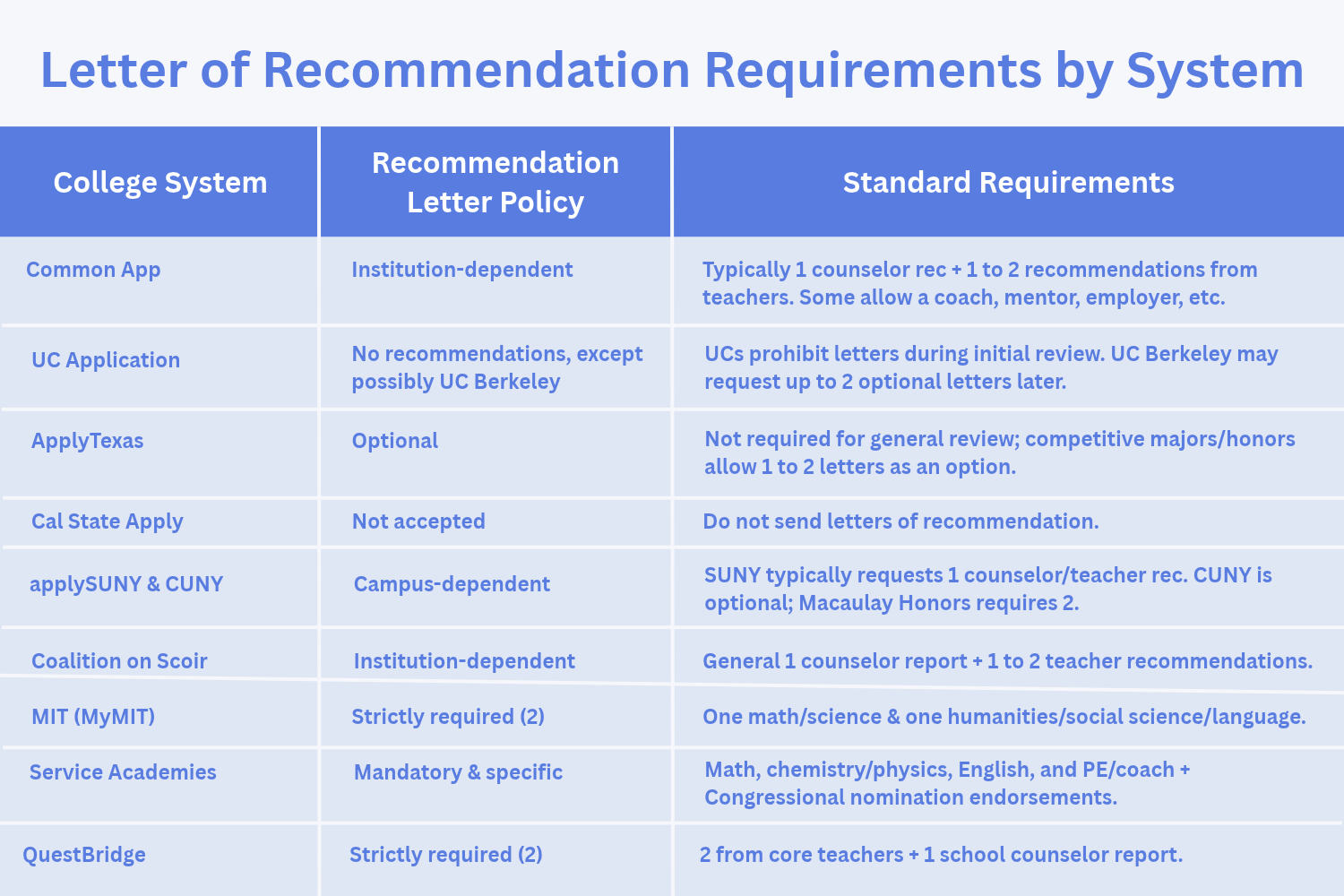
Letters of recommendation provide objective third-party proof of your intellectual curiosity, classroom presence, and collaborative character. However, policies vary dramatically across application portals, making a proactive strategy essential.
How to Choose Your Recommenders
Prioritize 11th-Grade Core Academic Teachers
Junior-year teachers (math, science, English, history, or foreign language) have seen your most rigorous upper-level work and know your current intellectual maturity.
Balance Across Disciplines
Unless applying strictly to specialized STEM programs that mandate specific pairings, aim for one humanities teacher (English or history) and one quantitative teacher (math or lab science) to showcase well-rounded academic ability.
Depth of Relationship Over “The Easy A”
A letter from an AP Chemistry teacher in whose class you earned a hard-fought B+—showing resilience, active office-hour participation, and peer mentoring—is far more persuasive than a lukewarm letter from a teacher who gave you an effortless 98% but never heard you speak.
Understand the Counselor’s Distinct Role
Your school counselor’s letter provides macro context (your school’s grading scale, course offerings, schedule limitations, and personal life circumstances), while teacher letters provide micro context (your contributions to seminar discussions, lab experiments, and writing critiques).
How to Ask for Recommendations

Timing is Everything
Teachers receive dozens of requests and often cap the number of letters they will write. Ask during spring of your junior year (May/June) or at the absolute latest by mid-September of senior year—at least 4 to 6 weeks before your earliest application deadline.
Make the In-Person “Safety Ask”
Always approach your teachers in person first (or via a formal, dedicated video call if attending online school). Phrase the question thoughtfully: “Do you feel comfortable writing me a strong letter of recommendation for my college applications?” (This phrasing gives the teacher an honest, polite out if they don’t know you well enough to write a compelling letter).
Equip Them with a Comprehensive “Brag Sheet”
Once they agree, provide a clean packet or digital folder containing:
-
-
- A concise academic and activities résumé.
- An honest “Brag Sheet” highlighting your favorite projects, papers, or lab experiments from their specific class, explaining what you found meaningful.
- A clean list of your target colleges, application deadlines, and intended majors.
-
Waive Your FERPA Rights
When invited to complete the Family Educational Rights and Privacy Act (FERPA) waiver in the Common App or school portal, always check “Yes, I waive my right to review this recommendation.” Admissions officers attach far greater weight to confidential letters, and checking “No” can signal to colleges that you may not trust your recommender’s candid evaluation.
Send Courteous Updates & Follow-Ups
Two to three weeks before the deadline, send a polite, appreciative check-in email confirming that the portal link arrived safely. Once decisions come out in the spring, personally deliver a handwritten thank-you note and update your recommenders on where you plan to attend.
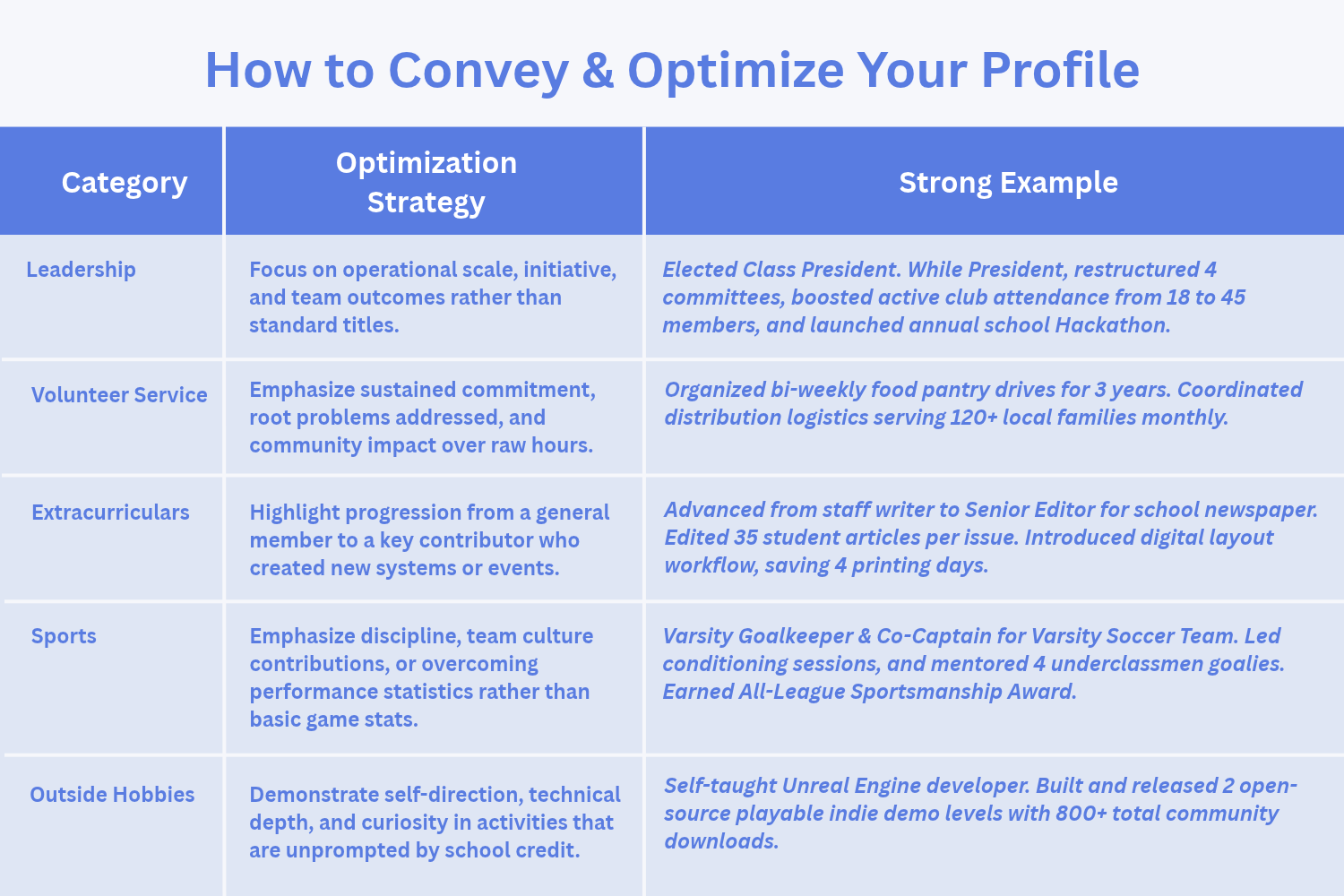
How to Optimize and Convey Your Profile
Admissions committees read applications through an impact-oriented lens. Transform passive descriptions into active metrics.
Unlocking “Automatic Acceptance”
A quiet revolution in college admissions is the rise of Direct Admissions and State Guaranteed Admissions Policies. Public and private institutions are proactively admitting students without requiring traditional upfront applications.
States and Systems Leading Direct Admissions
Statewide Legislative Direct Admissions
-
-
-
- California: The California State University (CSU) system utilizes direct admissions pathways using high school academic data to proactively notify qualified students of their acceptance.
- Minnesota: The Minnesota Direct Admissions program matches high school seniors to over 50 public, tribal, and private participating campuses based on their academic progress, informing them where they are accepted before they even apply.
- Idaho (“Direct Admissions Idaho”): High school seniors automatically receive admission letters to Idaho public colleges and universities based on their GPA and academic records.
-
-
Guaranteed Rank Percentile Admissions
-
-
-
- Texas: The Texas Top 6% / Top 10% rule guarantees automatic admission for eligible Texas high school graduates to participating state public universities (with UT Austin setting its threshold at the top 6%, and other public universities at the top 10%).
-
-
Third-Party Direct Admission Initiatives
-
-
-
- Networks like the Common App’s Direct Admissions initiative proactively message qualified users with non-binding offers of admission and fee waivers from dozens of partner universities.
-
-
How to Leverage Direct Admissions
Ensure Student Records Are Up to Date
Keep your profile info, state student ID, and school records current with your guidance counselor to ensure you are included in state direct admission data feeds.
Treat Direct Offers as Academic Safety Anchors
A direct admission offer immediately locks in an accredited, viable college option, freeing up energy and focus for selective applications.
Review Financial Aid Matching
Direct admission guarantees a seat, but financial feasibility depends on aid. File your FAFSA early to see the true cost of attendance.
Reducing the Cost of Applying and Attending College
College Application Fee Waivers
Application fees average $50 to $90 per school, which adds up quickly across 8 to 12 applications.
-
-
-
Common App & Coalition Fee Waivers: If you receive free or reduced-price lunch, qualify for SNAP/Medicaid, are an active ward of the state, or meet federal poverty income thresholds, request a fee waiver with a single checkmark on the portal. Your school counselor verifies it digitally, unlocking unlimited free applications across participating colleges.
-
Testing Waivers: Students who registered for the SAT or ACT using a fee waiver automatically qualify for college application fee waivers through College Board and ACT.
-
-
“Free Application Days” and Weeks
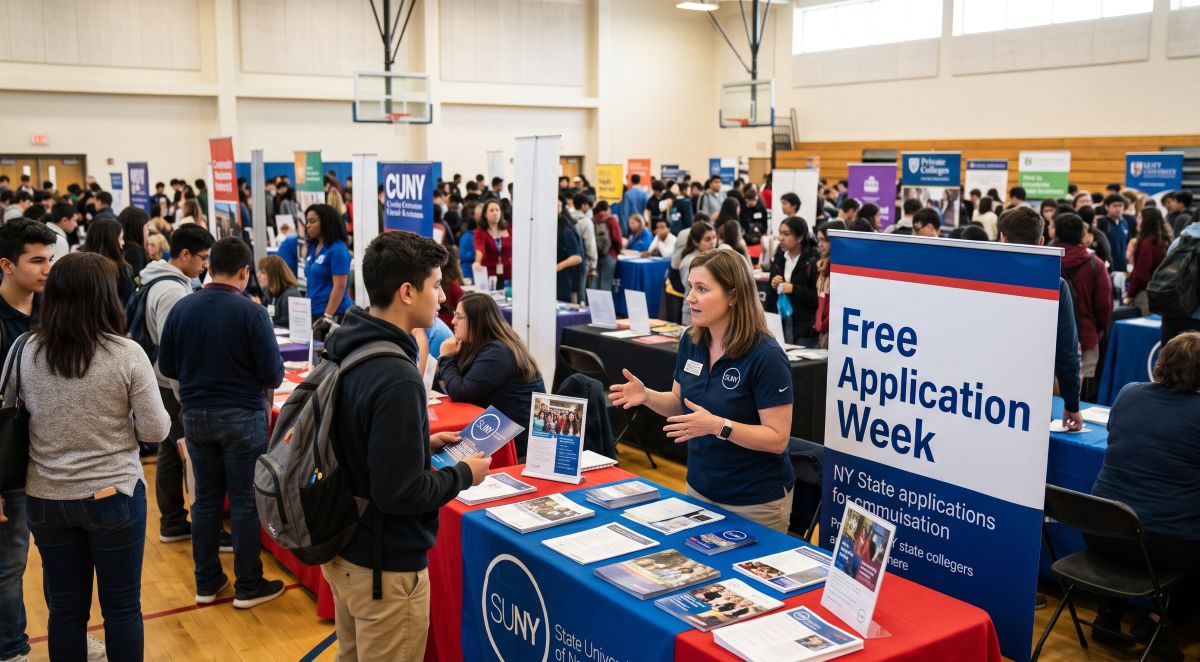
Many state departments of higher education designate fee-free application windows during the fall:
-
-
-
Colorado: Holds its annual “Free Application Days” in October, waiving undergraduate application fees at public four-year universities, community colleges, and participating private institutions.
-
New York: The SUNY and CUNY systems designate fall fee-waiver windows, allowing New York students to submit multiple college applications entirely free.
-
Other State Initiatives: States like North Carolina, Indiana, Kansas, and Virginia host dedicated “College Application Weeks” where state institutions waive processing fees. Check with your school counseling office or state higher education agency in September to note these deadlines.
-
-
The FAFSA: Accessing Federal and State Grants
FAFSA Fee Clarification
The FAFSA is always completely free. Be vigilant against scam websites charging an application or submission fee. Only file at studentaid.gov.
Maximize Federal & State Grant Aid
Filing the FAFSA is the only gateway to need-based Federal Pell Grants (which do not need to be repaid) as well as state-level financial aid packages (like Cal Grants in California or the Texas Public Education Grant). Because many state aid funds are awarded on a first-come, first-served basis until allocated funds run out, file your FAFSA as soon as it opens for your cycle.
Prioritizing Scholarships: The ScholarshipOwl Advantage

Local, corporate, and private scholarships bridge the gap between financial aid and tuition. Googling for scholarships and/or utilizing multiple scholarship websites can be inefficient and confusing. But with the ScholarshipOwl Platform, students find the process is much faster and easier, and that they have more control over their ability to earn scholarships.
Algorithmic Match & High-Probability Filtering
Rather than sorting through thousands of dead links or sweepstakes, ScholarshipOwl uses profile-matching technology to highlight opportunities that fit your exact demographic, intended major, and academic profile.
Credibility Scores & Spam Reduction
The platform assigns credibility ratings to scholarship providers and filters out low-value opportunities, ensuring your time is spent on verified programs.
Applicant Density Transparency
ScholarshipOwl shows user application volumes for specific scholarships, making it easier to prioritize opportunities with lower competition and higher odds of winning.
One-Click Recurring Applications
For recurring monthly or quarterly awards, you can set your profile to auto-renew your submission, keeping applications active in the background.
Not yet a member of ScholarshipOwl? Start your free 7-day trial today!
Working and Saving Strategies

Dual Enrollment & AP Credits
Scoring a 4 or 5 on Advanced Placement exams or taking dual-enrollment community college courses while in high school can clear an entire semester’s worth of general education credits, saving thousands in tuition and housing costs.
Institutional Work-Study
Mark “Yes” to Federal Work-Study on the FAFSA. Work-study earnings are subsidized by the federal government, are exempt from certain taxes, and are not counted against your income on subsequent years’ FAFSAs.
Employment
Work part-time during the school year, and full-time during breaks. Save as much of your earnings as you can and apply those funds to college costs.
Frequently Asked Questions (FAQs)
Does taking advantage of an application fee waiver hurt my admission chances?
Not at all. Admissions committees do not evaluate your ability to pay an administrative processing fee as a reflection of your academic merit or campus value. Most admissions evaluators do not even see fee waiver administrative flags during the review process.
How do colleges verify the hours and achievements listed in the Activities section?
Admissions offices conduct random and targeted integrity audits. If an achievement, national honor, or club presidency appears inflated or questionable, admissions evaluators frequently contact school counselors to confirm the details. Keep your descriptions accurate and honest.
If a college admits me through a “Direct Admissions” program, am I required to attend?
No. Direct Admissions offers are completely non-binding. You are under no obligation to enroll, and you can accept, decline, or hold onto the offer while waiting for responses from other colleges.
Can I reuse my Common App personal essay for the UC Personal Insight Questions or ApplyTexas?
You can adapt the underlying experiences, but you should not copy and paste the text directly. The Common App rewards creative storytelling and stylistic narrative structure, whereas the UC application explicitly looks for direct, concrete, interview-style responses that explain actions, metrics, and outcomes without literary flourish.
Should I apply to an institution using its native portal or the Common App if both are accepted?
Colleges maintain strict parity between portals: an admissions officer has no preference whether you submit via the Common App, Coalition on Scoir, or a school-specific portal. Choose whichever platform consolidates your workload most effectively, unless an institution explicitly requires its native platform for a specialized honors college or direct-admit scholarship track.
Your Next Move

Applying to college doesn’t have to feel like a high-stakes guessing game. When you treat the process as an intentional campaign—tailoring each portal to its strengths, telling candid stories rather than reciting resumes, and actively hunting down every available fee waiver and scholarship—you shift the balance of control back into your hands.
Build your schedule early, stay deliberate with your energy, and remember that admissions committees aren’t hunting for flawless perfection; they are looking for genuine perspective, initiative, and community impact. Open that primary portal, draft that first unvarnished paragraph, and take ownership of your journey. And make sure that journey prioritizes an affordable path to college. Get started today with your ScholarshipOwl free 7-day trial!
For Further Reading