- January 3, 2026
- Posted by: Educational V.
- Categories: Grants, Save Money, Scholarships

A college education has long been seen as the gateway to a better future, but the path to achieving it has become increasingly varied and, for many, financially daunting. Amidst rising tuition costs and student loan debt, attending a community college is a powerful, high-quality alternative. Far from being a “second choice,” these institutions offer a flexible and economically smart way to launch a career or prepare for a university transfer.

Win more scholarships with less effort
Simplify and focus your application process with the one-stop platform for vetted scholarships.
This blog post will delve into the world of community colleges, exploring their unique benefits, addressing common misconceptions, and guiding you through the opportunities that await their graduates.
What Exactly is a Community College?

A community college is a post-secondary educational institution that primarily offers associate’s degrees, certificates, and technical training programs. They are typically public institutions, funded by local property taxes, state governments, and student tuition, making them significantly more affordable than most four-year universities. They serve as a bridge between high school and a four-year university or as a direct pipeline into the workforce.
Community College vs. University: The Key Differences

While both community colleges and universities offer higher education, their core missions and structures differ:
Degrees Offered
Community colleges primarily grant associate’s degrees (2-year programs) and certificates. Universities primarily grant bachelor’s degrees (4-year programs) and often master’s and doctoral degrees.
Focus
Community colleges often have a dual focus:
Transfer Programs
Providing foundational courses (the first two years of a bachelor’s degree) that seamlessly transfer to a four-year university.
Workforce Development
Offering vocational and technical training that directly prepares students for specific careers.
Admissions
Community colleges generally have open admissions policies, meaning anyone with a high school diploma or GED can enroll, making higher education accessible to a broader population. Universities typically have more selective admission processes based on GPA, test scores, and essays.
Class Size & Instruction
Community colleges often boast smaller class sizes and faculty who are primarily focused on teaching. At a large university, your professor might be focused on publishing research, leaving teaching assistants to handle classes. At a community college, the faculty’s primary job is to be in the classroom with you.
Who Attends Community College?

You’ll find a vibrant, diverse mix of people on a community college campus:
Recent High School Grads
Many students start here to save money on their first two years of general education before transferring.
Working Adults
Many people return to “upskill” (learn new technology or skills to get a promotion) or “reskill” (train for an entirely new career).
Dual Enrollment Students
A growing number of high schoolers attend community college classes simultaneously, earning college and high school credits at the same time—often for free!
Degree and Certificate Programs at Community Colleges
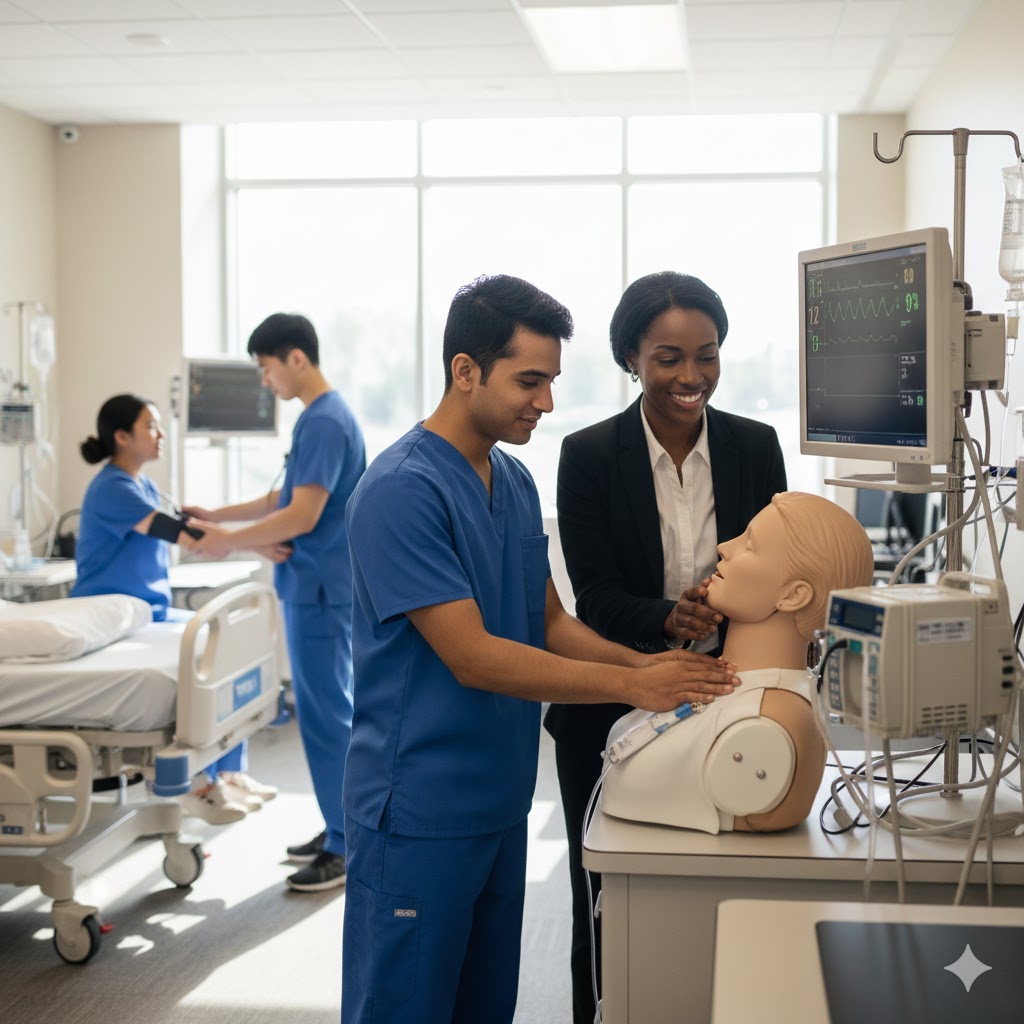
Community colleges offer a vast array of programs designed to meet both academic and workforce needs. Students can typically find:
Associate’s Degrees
Associate of Arts (AA), Associate of Science (AS), and/or Associate of Applied Science (AAS) degrees are typically 2-year programs if attending full-time. These degrees incorporate a combination of major-focused classes as well as general education classes. Students who complete an associate’s degree will have enough knowledge and skill in their field to pursue immediate employment, and they will also be able to transfer to earn a bachelor’s degree at a four-year university. When transferring, most students with an associate’s degree will start as a junior, and with careful planning, can complete their bachelor’s degree in two years.
Certificate Programs
Shorter than associate’s degrees, these programs provide specialized training in a particular skill set, often taking less than a year to complete. Examples include certifications in welding, phlebotomy, cybersecurity, or paralegal studies. Most certificate programs do not require general education courses, making them a popular choice for students who want to move quickly towards employment. Many of the classes required for certificate programs also offer transferrable credits to universities, so for students who might one day decide to pursue a bachelor’s degree, this is an added benefit.
The Compelling Advantages of Attending Community College

The benefits of starting your higher education journey at a community college are numerous and impactful:
Unbeatable Affordability
This is often the biggest draw. Community college tuition is significantly lower than four-year universities, drastically reducing or even eliminating the need for student loans. Many students can graduate debt-free.
Improved Wages & Career Mobility
Earning an associate degree or certificate can lead to significantly higher wages compared to a high school diploma, opening doors to careers that would otherwise be inaccessible.
Industry Partnerships
Most community colleges maintain robust relationships with local employers. These partnerships often lead to co-developed curricula, ensuring you learn exactly what local companies are hiring for, as well as easier paths to internships and job placements.
Start Your Career Sooner
Many vocational programs are designed for quick entry into the workforce, allowing graduates to begin earning money and gaining professional experience years earlier than their university counterparts.
Convenience & Flexibility
With campuses often located close to home, students can save thousands on living expenses by staying with family. Community colleges also tend to offer flexible scheduling with day, evening, and online classes, accommodating students who work or have family responsibilities.
Smaller Class Sizes & Dedicated Faculty
Unlike large university lecture halls, community college classes are often more intimate. Professors primarily focus on teaching and student success, offering more personalized attention and mentorship. They are often experts in their fields with real-world experience.
Vibrant Campus Life
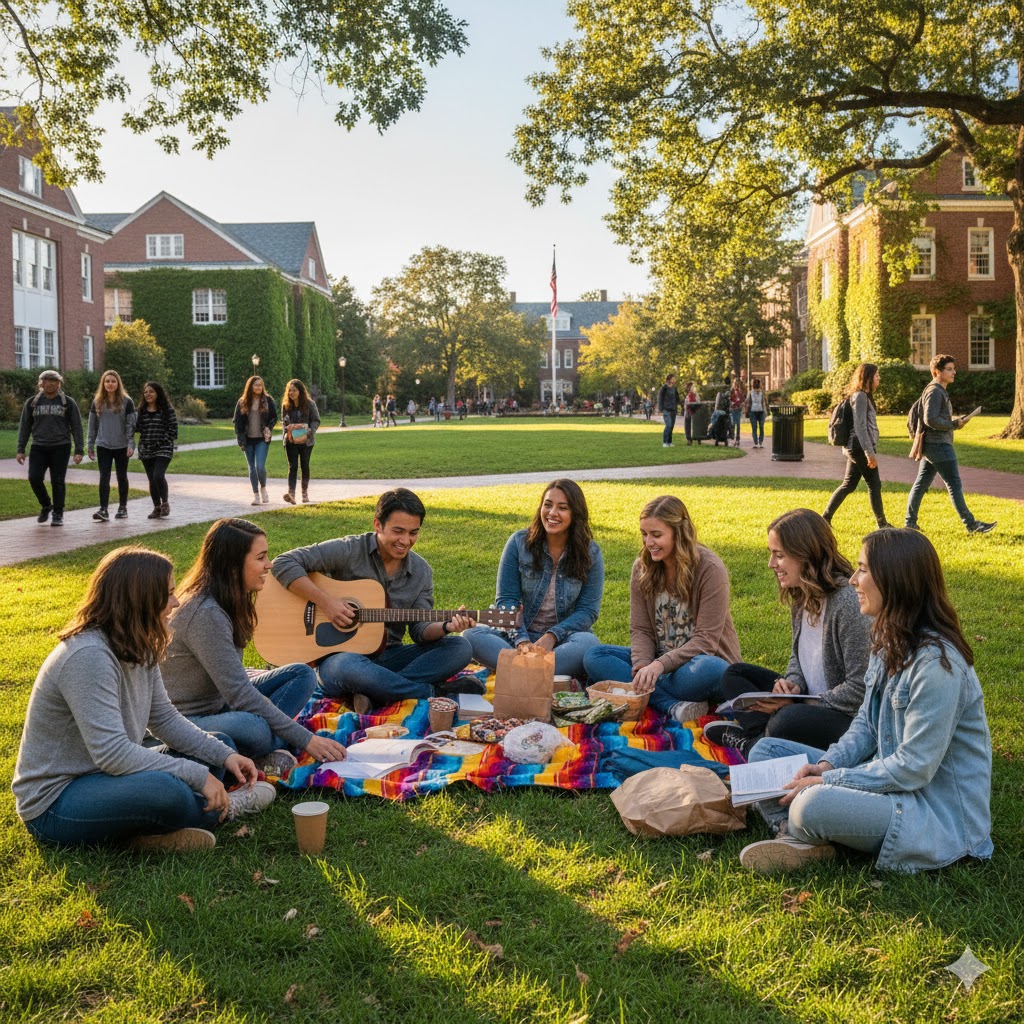
Community colleges are not just about academics. They offer a rich array of clubs, student organizations, sports teams, and cultural events, providing ample opportunities for social interaction and community building.
Networking Opportunities
Connect with professors who often have strong ties to local industries, and network with classmates who may become future colleagues. These connections can be invaluable for job placement and career advancement.
Ensuring You Get the Most Out of Your Community College Experience

All community college students should meet with an academic advisor soon after enrolling in classes. After your initial meeting with your academic advisor, plan to meet with your advisor at the beginning of each term to ensure you are on track with your goals.
Most colleges offer these appointments either in-person or virtually, making it possible for all students to fit these meetings in with their schedule. During your meeting, be prepared to discuss:
Academic and Career Goals
Make sure your academic advisor knows your short-term and long-term goals. Having this information will be key to ensuring that you take the courses needed to fulfill your goals. For example, if you are planning to transfer to earn a bachelor’s degree, discuss the college and/or program you are targeting. This will help your advisor to recommend a course plan for you.
Desired Speed of Completion
Some students want to “get in and get out” as fast as possible, to enable them to move into employment quickly and/or to transfer to a university as soon as possible. If this sounds like you, tell your academic advisor, and ask for specific advice about how to complete your associate degree or certificate as quickly as you can. On the other hand, if you want to take some time to explore careers, and/or if you don’t feel you’ll be able to attend school full-time, let your advisor know that as well.
Student Life Goals and Personal Interests
Academics are only part of the college experience. Community colleges have numerous clubs, recreational activities, events, and other social opportunities built-in to suit students of all backgrounds and interests. Ask your advisor to tell you about the varied opportunities available to students so that you’ll be able to participate in the activities that interest you.
Programs and Support Services
Your advisor can refer you to numerous programs and support services designed to help you to be successful in college. Examples include tutoring services, disability support services, financial aid and scholarships, career services, basic needs services, veterans services, services for student parents, etc.
Financial Aid & Scholarships

A common myth is that financial aid is only for “big” schools. In reality, you can use Federal Pell Grants, state-funded grants, and private scholarships at community colleges.
But the best news is that community colleges are incredibly affordable to begin with. In fact, more than half of states allow their in-state residents to attend community college tuition-free! And even if your state does charge tuition for community college, the cost will be much lower than any university you might be considering.
The Result
Because community college tuition is already low, receiving a Pell Grant or a few scholarships or even just working part-time can often cover all of your education expenses if you continue living with your family.
How to Apply for Financial Aid
To apply for federal and state grants, as well as to qualify for institutional need-based aid from community colleges, make sure you submit the Free Application for Federal Student Aid (FAFSA).
How to Apply for Scholarships
Community colleges each offer their own institutional scholarships. Some are merit-based, and some are need-based. You can apply for institutional scholarships directly from the community college you plan to attend.
In addition, there are numerous scholarships offered by businesses and organizations, and these scholarships can be used at community colleges as well as universities. At any given time, the ScholarshipOwl platform has at least $500,000 in currently active scholarships that students can apply for! The platform is AI-powered, making it faster and easier to apply for the scholarships that are best-fit for you AND that you’ll have a better chance of winning. If you are not yet a member of ScholarshipOwl, go to www.ScholarshipOwl.com to sign up and access your free 7-day trial!
Community College vs. Private Trade Schools: Why Community College Often Wins

When choosing between a specialized private trade school and a community college for career-focused training, community colleges often present a more compelling value proposition:
Accreditation and Transferability
Community colleges are regionally accredited, making their credits and degrees more widely recognized and transferable to other educational institutions. Private trade schools may only have national accreditation, which can limit future transfer options.
Cost
Community colleges are almost always significantly more affordable than private trade schools, which often have higher tuition rates due to their for-profit nature.
Breadth of Education
While trade schools focus narrowly on one skill, community colleges offer a broader educational experience, including general education courses. This well-rounded foundation can make graduates more adaptable in a changing job market.
Diverse Program Offerings
A single community college often houses dozens of diverse programs, allowing students to explore different interests or pivot more easily if their initial career choice changes.
What Can You Study?

Community colleges offer a massive range of programs across almost every industry, just like most universities. But on top of that, community colleges offer career education programs that you won’t find at most four-year universities. Academic programs may include, but are not limited to:
Business
Accounting, Business Management, Entrepreneurship, Marketing, and more.
Communications and World Languages
Communications, Creative Writing, English Literature, Journalism, Mass Communications, World Languages, and more.
Healthcare
Dental Assisting, Dental Hygiene, Medical Assisting, Nursing (RN/LPN), Pharmacy Technician, Public Health, Radiologic Technology, Surgical Technician, Veterinary Technician, and more.
Natural Sciences
Biological Sciences, Chemistry, Environmental Science, Physics, and more.
Performing Arts
Dance, Drama, Technical Theater, Music, Recording Arts, and more.
Public Safety, Public Service & Legal Support
Emergency Medical Technician (EMT), Fire Science, Law Enforcement, and Paralegal Studies.
Skilled Trades
Advanced Manufacturing, Automotive Technology, Construction Management, Culinary Arts, Heating, Ventilation, and Air Conditioning (HVAC), Plumbing, Welding, and more.
Social Sciences and Education
Anthropology, Criminal Justice, Early Childhood Education, Ethnic Studies, Political Science, Psychology, Sociology, and more.
Technology
Computer Network Technology, Cybersecurity, Data Analytics, Electronics & Robotics Technology, Engineering Technology, Geographic Information Technology (GIS), Web Development, and more.
Visual Arts
Art History, 3D Modeling and Animation, Digital Marketing, Graphic Design, Studio Arts, and more.
Dispelling Common Myths About Community College

Let’s bust some pervasive myths:
Myth 1: “Community College is for Students Who Couldn’t Get Into a ‘Real’ College.”
Reality
Community colleges serve a diverse student body, including high-achievers starting affordably, working adults seeking new skills, and individuals exploring career paths. Many go on to excel at top universities.
Myth 2: “The Education Quality Isn’t as Good.”
Reality
Many community college instructors hold master’s or doctoral degrees and often have extensive real-world experience, bringing practical knowledge to the classroom. The focus on teaching, rather than research, often means more dedicated instruction. Community college courses are rigorous and held to the same accreditation standards as universities.
Myth 3: “Credits Won’t Transfer to a Four-Year University.”
Reality
Most community colleges have explicit articulation agreements with state universities, guaranteeing that specific associate degrees and courses will transfer. Careful planning with an academic advisor is key.
Myth 4: “You won’t be able to get a good job.”
Reality
Many associate degree holders in fields such as nursing or cybersecurity earn more than university graduates in many liberal arts fields.
Myth 5: “Employers are only interested in job seekers who graduated from a prestigious college.”
Reality
The vast majority of employers don’t care where you went to college. They are interested in whether or not you went to college at all, and they are interested in what degree or certificate you obtained, not where you got it from! And if you started at a community college and transferred to a university for a bachelor’s degree, they won’t be focusing on where you went to community college in any case. They just want to know what degrees, certificates and/or credentials you have that are relevant to the job you’ve applied for.
Opportunities After Community College
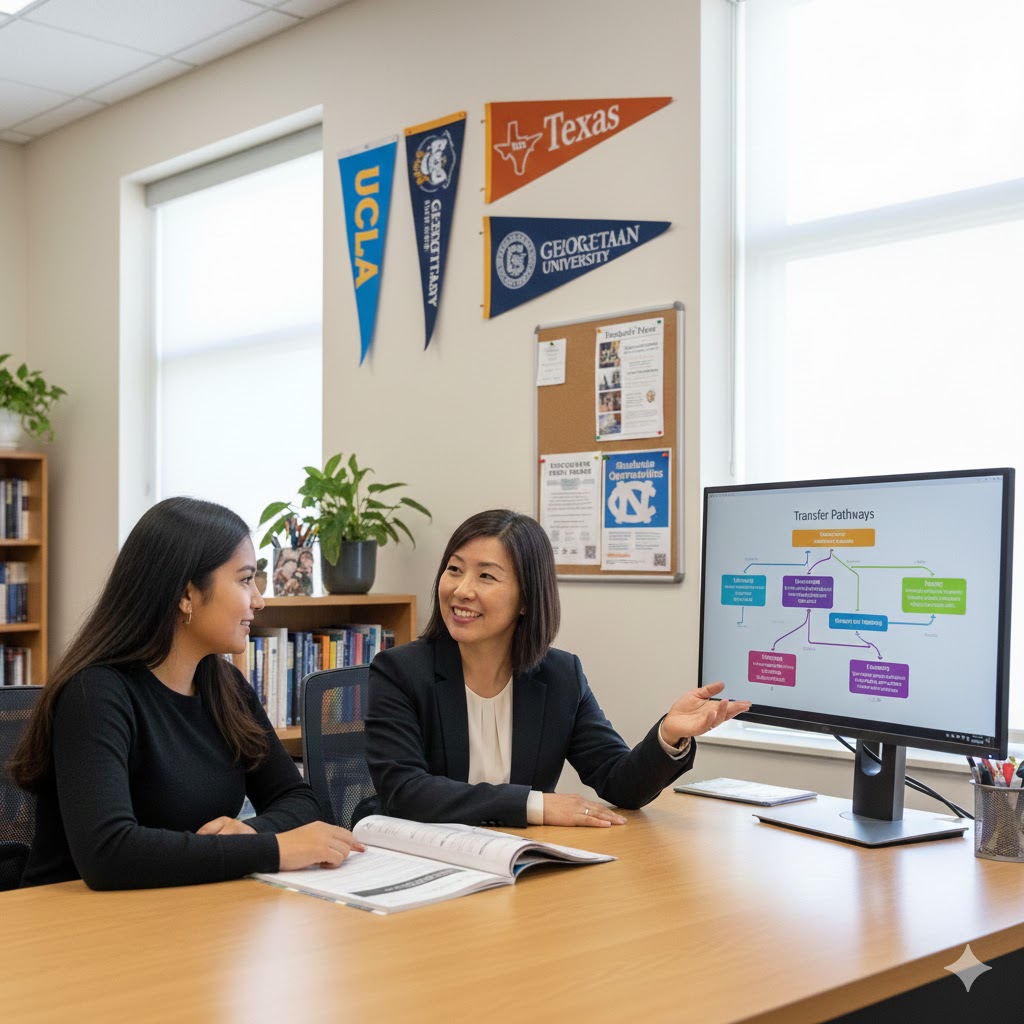
Completing a program at a community college opens several exciting pathways:
Immediate Employment
Graduates with an associate degree or certificate are often highly sought after by local businesses, entering well-paying fields like healthcare, IT, skilled trades, and business operations.
Transfer to a Four-Year University
The “2+2” pathway is incredibly popular. Students complete their associate degree and then transfer their credits to a four-year institution to earn a bachelor’s degree, often entering as a junior, saving $20,000 to $40,000 on their first two years!
Stackable Credentials, Often with Employer-Provided Education Benefits
Some students choose to enter the workforce with a certificate or associate degree, gain experience, and then return to complete a bachelor’s degree later. Many employers will provide tuition reimbursement, scholarships, or other education benefits to help you pay for your your bachelor’s degree!
Community College is a Smart Choice for All Students
In an educational landscape that increasingly demands both quality and value, community colleges stand out as an exceptional choice. They provide an affordable entry point to higher education, a direct path to in-demand careers, and a solid foundation for further academic pursuits. Whether you’re looking to launch a new career, upgrade your skills, or lay the groundwork for a bachelor’s degree, a community college offers a flexible, supportive, and economically smart solution. Don’t overlook the power of your local community college—it might just be the smartest first step you can take toward your future.