Beginning your college journey or returning for another year brings a whole new level of independence. From day one of the semester, you are in charge of your own schedule, your social life, your coursework, and your bank account. No one is standing over your shoulder reminding you to eat a decent meal, set an alarm for class, or submit financial aid forms before deadlines pass.
To thrive without burning out or burying yourself in unnecessary debt, you need a strategy. At ScholarshipOwl, we want you to succeed in college. Here are our best tips for tackling college like a pro.
“Adulting” & Life Management: Take Control of Your Daily Life
Independence sounds great in theory, but once you are on your own, you’ll discover that running your daily life has its challenges! You’ll need to create some basic systems to ensure that small things don’t derail your semester.
Build a Sickness Survival / First Aid Kit
Don’t wait until you have a 102°F fever or stumble into an injury. Before move-in day, create your own sickness survival / first aid kit, stocking it with the basics you should always have on hand:
Pain relievers / fever reducers
Cold and flu meds
Allergy meds
A thermometer
Throat lozenges
Antacids
Band aids
Antibiotic ointment
Gauze pads
Medical tape
Instant cold packs
Ace bandage / ankle wrap
Other tips: Keep a photo of your health insurance card on your phone and program the campus health clinic number into your contacts.
Make the Most of Your Dining Hall Meal Plan
Don’t let your prepaid meal plan go to waste on late-night takeout or skip meals because campus food feels repetitive. Optimize your plan with a few smart strategies:
Balance Your Plate
Dining halls make it easy to grab comfort food every day, but relying solely on pizza and fries leads to afternoon energy crashes. Build meals around protein, complex carbs, and green options to keep your focus high.
Stock “Dorm Room Staples” for Late Nights
Even with a meal plan, late-night study sessions happen when dining halls are closed. Keep budget-friendly essentials in your room—like oats, peanut butter, fruit, canned soup, and protein bars—so you aren’t forced to spend extra cash on food delivery apps.
Track Your Swipes or Dining Dollars
If your plan gives you a set number of meal swipes per week or declining balance dollars per semester, check your balance bi-weekly. Unused swipes often don’t roll over, while burning through campus cash too fast leaves you paying out-of-pocket by finals week.
Master the Two-Minute Rule
If a task takes less than two minutes, like hanging up your jacket, rinsing your coffee mug, or throwing dirty clothes in the hamper, do it right then. Keeping your physical space tidy takes very little effort in short bursts, but it dramatically lowers your daily stress. And it also keeps your roommate happy!
Roommates & Social Life: Build Your Tribe & Keep the Peace
Speaking of roommates…. Our social environment heavily impacts mental health and academic focus. Managing living spaces and building genuine friendships takes proactive effort.
Set Up Roommate Rules
Don’t rely on unspoken assumptions. Within your first three days, sit down with your roommate(s) and agree on the basics: quiet hours, guest rules, cleaning responsibilities, and sharing food or personal items. If a problem comes up later, address it calmly within 24 to 48 hours before resentment builds.
Leave Your Door Open Where Possible
Prop your dorm room door open whenever you are hanging out or casually studying. It signals that you’re open to chatting and makes it effortless for neighbors to drop by and say hello. Literally having an open door policy can make a big difference as you are settling in and building friendships.
Of course, when you want or need some quiet time to yourself, close your door and get that privacy you crave.
Win more scholarships with less effort
Simplify and focus your application process with the one-stop platform for vetted scholarships.
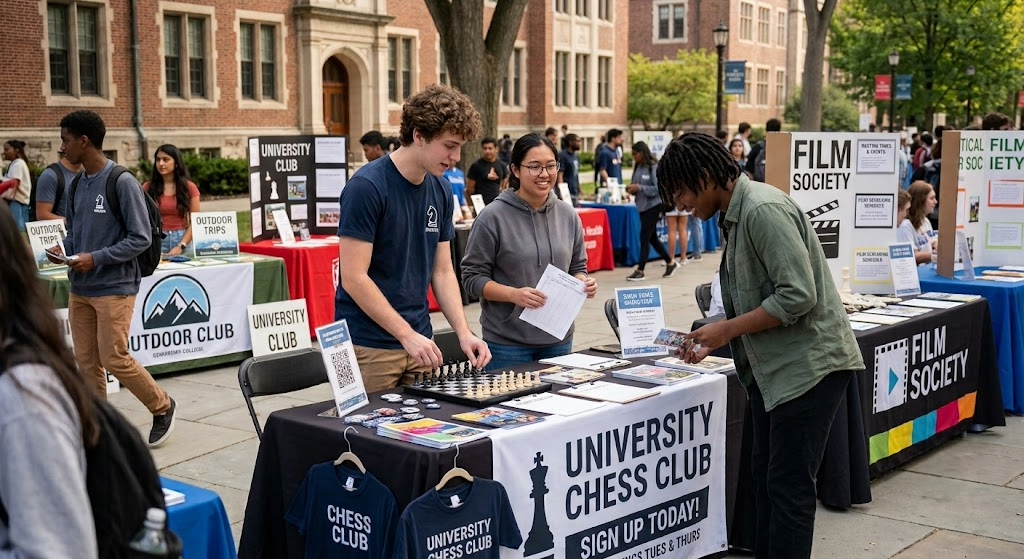
Go to the campus involvement fair and sign up for organizations, but focus your energy on four:
One for your major or career
One focused on a cause you care above
One for fitness or activity
One purely for fun
Smart Funding & Money: Graduate with Minimal Debt
Financial stress is one of the biggest roadblocks to finishing your degree. Protecting your wallet means maximizing “free money” and watching daily expenses.
Re-Apply for Aid Every Single Year
The FAFSA isn’t a one-and-done form. File it as soon as it opens for each upcoming school year to secure federal grants, state aid, and institutional awards. If your school accepts the CSS Profile, submit that every year as well.
Never Stop Applying for Scholarships
High school seniors aren’t the only ones who get scholarships. Current college students qualify for thousands of awards every semester to help cover tuition, housing, and textbooks. Using a platform like ScholarshipOwl speeds up the search by automatically matching you with vetted, higher-probability college scholarships based on your profile. You can apply to multiple opportunities, track your statuses, and re-apply for recurring awards directly from one dashboard. If you aren’t yet a member, you can start your ScholarshipOwl 7-day free trial.
Borrow Only What You Absolutely Need
If your financial aid package offers more loan money than you need for basic tuition and housing, don’t use the leftover cash for lifestyle inflation. Ask your financial aid office to return the unused portions to keep your debt as low as possible.
Look for Strategic On-Campus Jobs
Federal Work-Study and campus desk jobs (like working for your major department, at the library, student center, or computer lab) are ideal. They offer flexible hours around your class schedule and frequently allow you to read or complete assignments during quiet shifts. Other great options: Working as a teacher’s assistant (TA) for one of your professors, working in the writing or math lab, serving a peer tutor, etc.
All of these kinds of roles not only will help you pay for your college and living expenses; they will also build your resume and LinkedIn, positioning you for more advanced roles in your field as you grow your knowledge and skills.
Study Skills: Upgrade Your Learning Habits
High school study methods like passive re-reading and night-before cramming are not ideal for college. You need strategies that stick.
Thank you for subscribing!
Use Active Recall Instead of Highlighting
Re-reading notes line-by-line creates a false sense of security. Instead, test yourself: close your notebook and write down everything you remember about a topic, or use flashcard tools like Anki or Quizlet to test your memory actively. You can also access AI tools like Gemini, Claude, and ChatGPT and ask them to quiz you on topics you are studying.
Space Out Your Prep
Instead of studying six hours the night before a test, study for 45 minutes every day for a week. Spacing out your reviews locks information into your long-term memory far more effectively. But don’t abandon cramming entirely! Cram sessions activate your short-term memory, which can add another layer to your longer-term exam prep.
Take Advantage of Professor Office Hours
Professors literally block out time every week to help students, yet few show up until finals week. Visit during weeks two or three with specific questions about a reading or assignment. Building that connection can pay off in better academic guidance, research opportunities, and strong recommendation letters down the road.
My recommendation: Visit each of your professors at least three times per semester:
First visit should be during their office hours during the first three weeks of the term
Second visit should be mid-semester to ask questions / gather information prior to your midterm, essay, or important project.
Third visit should be close to finals week to get tips for exam prep, etc.
Bonus Tip: If you can, bring an essay or class project you are working on when you attend office hours. Ask your professor to review and give you feedback before you finalize. Why? So that you’ll get the benefit of your professor’s insight, and can incorporate suggested edits BEFORE you submit. If you’ve been struggling academically, or just want to have some extra support for challenging project, you’ll be amazed at what a difference this makes!
Time Management: Own Your Schedule
In college, you will have wide gaps of free time between classes. If you don’t assign a job to those hours, they will disappear into social media and scrolling.
Time-Block Your Digital Calendar
Put everything on Google Calendar or Outlook: class times, study sessions, work shifts, workout times, and social events. When you schedule your free time, you can enjoy it guilt-free, knowing your work is accounted for.
Capitalize on Gaps Between Classes
If you have a two-hour gap between lectures, don’t head back to your bed. Go straight to the library to review notes, answer emails, or knock out a reading assignment. Using daytime gaps leaves your evenings open for rest and social activities.
Work in 25-Minute Sprints
Use the Pomodoro Technique: 25 minutes of complete focus followed by a 5-minute break away from screens. This keeps your brain fresh during long study sessions.
Organization: Stop Deadlines from Sneaking Up
Disorganization causes unnecessary anxiety. A clear system keeps your coursework and obligations structured.
Build a “Master Syllabus” Tool
During week one, leverage an AI tool to help you create a “master syllabus” covering all of your classes. This will help you stay on track, and will also enable you to spot heavy weeks filled with exams, projects, and essays more easily. You could do this manually yourself, but why do so when AI tools are readily available?
Dedicated Syllabus-to-Calendar AI Apps
These tools are built specifically for students to convert syllabi directly into structured schedules and calendar events (.ics files):
DormWay: A specialized tool where you upload your course syllabi, and the AI extracts dates to generate a clean, unified timeline of your semester.
SyllySync / Sylly: An app designed to parse uploaded PDF syllabi, pull out every exam, quiz, and homework deadline, and auto-populate your phone’s calendar or task manager.
Due Gooder: Popular platform that integrates directly with Google Calendar or Apple Calendar after scanning course files or Learning Management Systems (LMS) like Canvas.
General-Purpose AI Models (ChatGPT, Claude, Gemini)
If you already use ChatGPT Plus, Claude, or Gemini Advanced, you don’t need a dedicated app. You can upload your syllabus PDF directly into the chat and use a prompt like this:
“Analyze this attached syllabus PDF. Extract every single exam, paper, project, quiz, and reading assignment with its due date and course name. Format the output as a clean table with the columns: [Date, Course, Task Type, Task Name, Details]. Then, format it so I can copy and paste it into Excel/Google Sheets, or output a .CSV format.”
Organize Your Cloud Drives
Create clean folders on Google Drive or OneDrive for each semester, with subfolders for each course (e.g., Fall 2026 ➔ ECON 101 ➔ Assignments). Name files clearly (e.g., ECON101_Essay1_Draft) so you never lose a document right before a deadline.
Do a 5-Minute Nightly Reset
Every night before bed, clear your desk, review tomorrow’s schedule, and pack your backpack with your laptop, chargers, and water bottle. Starting the morning organized sets the tone for the entire day.
Career Prep: Start Building Your Future Now
Graduation day comes faster than you think. Starting your professional prep early takes the stress out of job hunting later.
Keep Your LinkedIn & Resume Updated
Update your master resume and LinkedIn profile every semester with new coursework, volunteer projects, club positions, and summer jobs. Don’t yet have a LinkedIn? Create one now. It’s too important to put off for another day!
Use the Career Center Long Before Senior Year
Visit your campus career office as a freshman or sophomore. Get your resume reviewed, run through mock interviews, and ask for guidance on finding internships and jobs.
Apply for Internships Early in the Fall
Recruitment for summer internships in fields like business, tech, and engineering often peaks early in the fall semester (September–November). Set up job alerts on LinkedIn and Handshake so you don’t miss application windows.
Final Thoughts
You don’t need to implement every single habit overnight. Pick one core strategy from each section to focus on during your first two weeks on campus. Build your foundation step-by-step, stay focused on your goals, and make this your best year yet. And make sure to apply to scholarships all throughout college, so you can graduate without the burden of student debt. To make the process faster and easier, start your ScholarshipOwl free 7-day trial today!
For Further Reading
How can we help you?
Contact us at the Consulting WP office nearest to you or submit a business inquiry online.